Every dollar you put in cuts your tax bill.
Every dollar you take out for your first home
is completely tax-free.
It is not either/or. It is both.
The First Home Savings Account is the only registered account in Canada that gives you the RRSP deduction on the way in and the TFSA tax-free withdrawal on the way out. If you are renting and thinking about buying, this account should already be open.
WHY THE FHSA IS DIFFERENT FROM ANYTHING ELSE
The federal government created an account that combines the best feature of the RRSP with the best feature of the TFSA, specifically for first-time home buyers.
An RRSP contribution reduces your taxable income in the year you contribute, but the withdrawal is taxed as income later. A TFSA contribution uses after-tax dollars, but the withdrawal is completely tax-free. The FHSA does both: your contribution is deductible now, and your qualifying withdrawal for a home purchase is never taxed.
The result is that every dollar you contribute costs you less than a dollar after your refund arrives, and you withdraw the full balance for your down payment without giving any of it back at tax time.
You can contribute up to $8,000 per year, with a lifetime cap of $40,000 per person. If you and a partner are both first-time buyers, you each get your own FHSA: $80,000 combined lifetime room and $16,000 per year combined, all of it eventually tax-free on withdrawal.
Book a free consultationThe math: $8,000/year for 5 years
Illustrative example assuming 30% marginal tax rate and 5% annual return
Total benefit over RRSP or TFSA alone
~$58,000
Withdrawal + refunds. Actual results vary with tax rate, returns, and timeline. For illustration only.
THE RULES YOU NEED TO KNOW
Annual limits, carry-forward room, and the account lifetime. These numbers determine how much you can put in and when you need to move.
$8K
Annual contribution limit
You can contribute up to $8,000 in any calendar year. Contributions are deductible on your tax return for that year, or you can carry the deduction forward to a higher-income year when the refund will be larger.
+$8K
Carry-forward room
If you contribute less than $8,000 in a year, you can carry forward the unused room, but only up to $8,000 total. This means you can contribute up to $16,000 in a single year by combining the current year's room with the previous year's unused amount.
15yr
Account lifetime and the exit deadline
The FHSA must close by December 31 of the year you turn 71, or by December 31 of the 15th year after you opened it, whichever comes first. If you have not bought a home by then, you transfer the balance to your RRSP or RRIF without using RRSP room.
4yr
First-time home buyer definition
You qualify as a first-time home buyer if you did not own and live in a home in the current calendar year (before the withdrawal) or in any of the 4 preceding calendar years. Prior homeowners may qualify again after a 4-year gap.
$40K
Lifetime contribution cap
The maximum lifetime contribution is $40,000 per person across all FHSAs you hold. Unlike the TFSA, contribution room does not restore after a withdrawal. Once the money is used for a qualifying home purchase, that room is gone permanently.
Any
What you can hold inside
An FHSA can hold the same types of investments as an RRSP or TFSA: cash, GICs, mutual funds, ETFs, stocks, and bonds. It is not a savings account in the traditional sense. Investing it appropriately over a multi-year horizon makes a meaningful difference.
WHAT HAPPENS WITH YOUR FHSA
Two scenarios. One works out better than anything else available. The other is still a good deal.
You buy your first home
Make a qualifying first home purchase and withdraw the full balance of your FHSA, including all contributions, investment growth, and any carried amounts.
- Zero tax on the withdrawal, regardless of how much the account grew
- Must have a written agreement to buy or build a qualifying home before withdrawing
- Qualifying home must be acquired before October 1 of the year after the withdrawal
- Can combine with the RRSP Home Buyers' Plan for even more down payment power
- FHSA closes after the qualifying withdrawal is complete
- Your partner can make their own separate qualifying withdrawal from their own FHSA at the same time
You do not buy a home
If you decide not to purchase a home, or the account reaches its 15-year or age 71 deadline, you have two options for the balance.
- Transfer tax-free to your RRSP or RRIF without needing RRSP contribution room. This is a significant benefit on its own
- Withdraw the balance as income in the year of withdrawal, taxed at your marginal rate. The contributions you deducted are simply recaptured at tax time
- Either way, the deductions you took during the contribution years were real and valuable, not lost
- For anyone uncertain about home ownership, the FHSA is still worth opening because the RRSP transfer option makes it a superior way to fund your RRSP without using contribution room
HOW THE FHSA COMPARES
The FHSA versus the RRSP Home Buyers' Plan and the TFSA. Each serves a different purpose. The FHSA is the only one designed specifically for first-home buyers.
| Feature | FHSA | RRSP (Home Buyers' Plan) | TFSA |
|---|---|---|---|
| Contribution tax deduction | Yes | Yes | No (after-tax dollars) |
| Qualifying home withdrawal taxed | No (tax-free) | Requires repayment over 15 years or taxed | No (always tax-free) |
| Repayment after home withdrawal | None required | Yes: up to $60,000 over 15 years | Not applicable |
| Maximum for home purchase | $40,000 lifetime | Up to $60,000 (borrowed from RRSP) | No limit, but no deduction benefit |
| Room restores after withdrawal | No | Depends on repayment | Yes, January 1 following year |
| Can transfer to RRSP if no home | Yes, without using RRSP room | Already in RRSP | No |
| Investment growth inside | Tax-sheltered | Tax-sheltered | Tax-sheltered |
| Requires first-time buyer status | Yes | Yes | No (any purpose) |
Strategy highlight
First-time buyers can use both the FHSA and the RRSP Home Buyers' Plan on the same purchase.
There is no rule against using both accounts toward a single home purchase. A first-time buyer can withdraw from their FHSA tax-free and simultaneously use the RRSP Home Buyers' Plan to borrow from their RRSP. The FHSA requires no repayment. The HBP requires repayment over 15 years, but the borrowing itself is not taxed.
If both partners in a household are first-time buyers, each person can draw from their own FHSA and their own RRSP, potentially combining four separate pools of savings toward the same purchase.
FHSA (per person)
$40,000
Tax-free. No repayment.
RRSP HBP (per person)
$60,000
Borrowed. Repay over 15 years.
Combined (one person)
$100,000
Toward a down payment from registered accounts alone.
COMMON QUESTIONS
What first-time buyers ask about the FHSA before opening one.
Yes, and you should. Opening the account as early as possible starts the contribution room clock and starts the 15-year lifetime window from the year you open it, not from when you first contribute. Even if you only put in a small amount to start, you lock in that opening year. Each year the account is open, you accumulate $8,000 in annual room, with up to $8,000 of unused room carrying forward to the next year. There is no penalty for having the account open years before you buy.
You may still qualify. The first-time home buyer definition for the FHSA looks back 4 calendar years, not your entire history. If you did not own and live in a qualifying home in the current calendar year or the 4 preceding years, you meet the definition even if you were a homeowner before that period. This means someone who owned a home in 2018, sold in 2019, and has been renting since could potentially qualify in 2024 onward. Your specific circumstances should be confirmed with a tax professional or advisor.
Yes. Each individual gets their own FHSA. If both partners in a couple are first-time home buyers under the definition, each can have their own account with their own $8,000 annual room and $40,000 lifetime limit. Both can make qualifying withdrawals toward the same home purchase at the same time. This means a couple buying together could draw up to $80,000 combined from their FHSAs toward a single down payment, all of it completely tax-free with no repayment required.
Yes. This is one of the more flexible features of the FHSA. You are not required to claim the deduction in the same tax year as the contribution. If you expect to earn more in a future year and want a larger refund from a higher marginal rate, you can contribute now to build the account and claim the deduction later when it is worth more. This is similar to how RRSP deductions work. Just keep track of your unclaimed contributions so you claim them in the right year.
A qualifying home is a housing unit located in Canada. This includes single-family homes, condominiums, townhouses, semi-detached homes, mobile homes, and shares in a co-operative housing corporation that gives you equity in a housing unit. You must intend to occupy the home as your principal place of residence no later than one year after buying or building it. Rental properties and vacation properties used purely as investment or recreational properties do not qualify. The home must be acquired before October 1 of the year following the year you make the withdrawal.
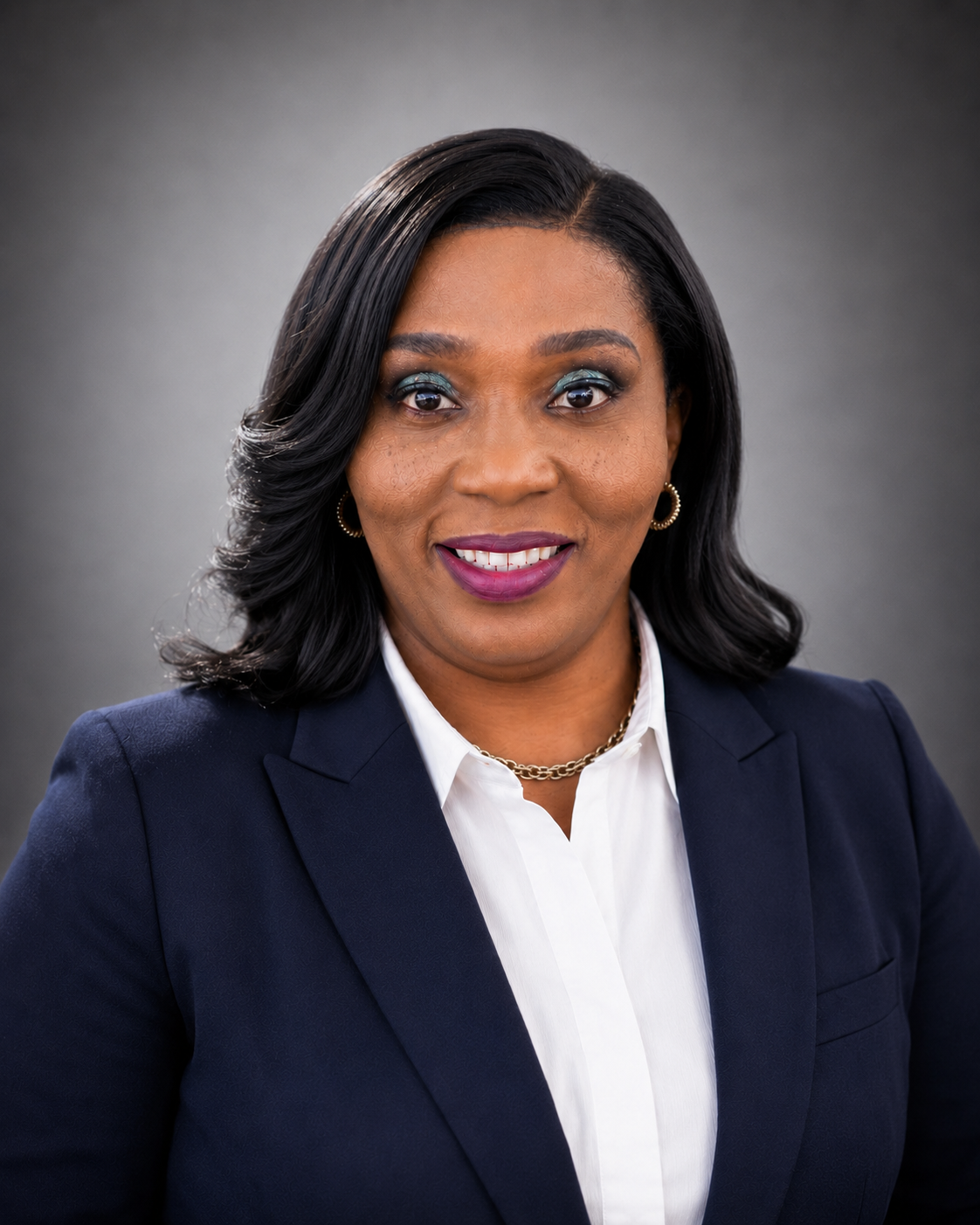
YOUR ADVISOR
Mukosolu Blessing Ezeife
Licensed Life Insurance Agent, Greatway Financial
A lot of renters thinking about their first home are not combining their FHSA with life insurance planning. What is the point of building a down payment if the person funding it is not protected? I help first-time buyers think about both: the savings account that gets them into a home and the protection that keeps it safe if something happens to them.
If you are in Ontario or Alberta and you are renting, the consultation is free and there is no pressure. We can look at what you have, what you need, and what order to do things in.
Book a Free ConsultationThe year you open your FHSA is the year your $8,000 room starts. Every year it stays closed is room you cannot get back.
You do not need to be ready to buy to open it. You just need to be a first-time buyer. Open it now, contribute when you can, and let the deductions and growth work while you plan.
Start Your First Home Plan TodayMukosolu Blessing Ezeife is a Licensed Life Insurance Agent operating under Greatway Financial (MGA). Licensed with FSRA (Ontario) and AIC (Alberta). © 2026 Ezeife Financial. All rights reserved.